
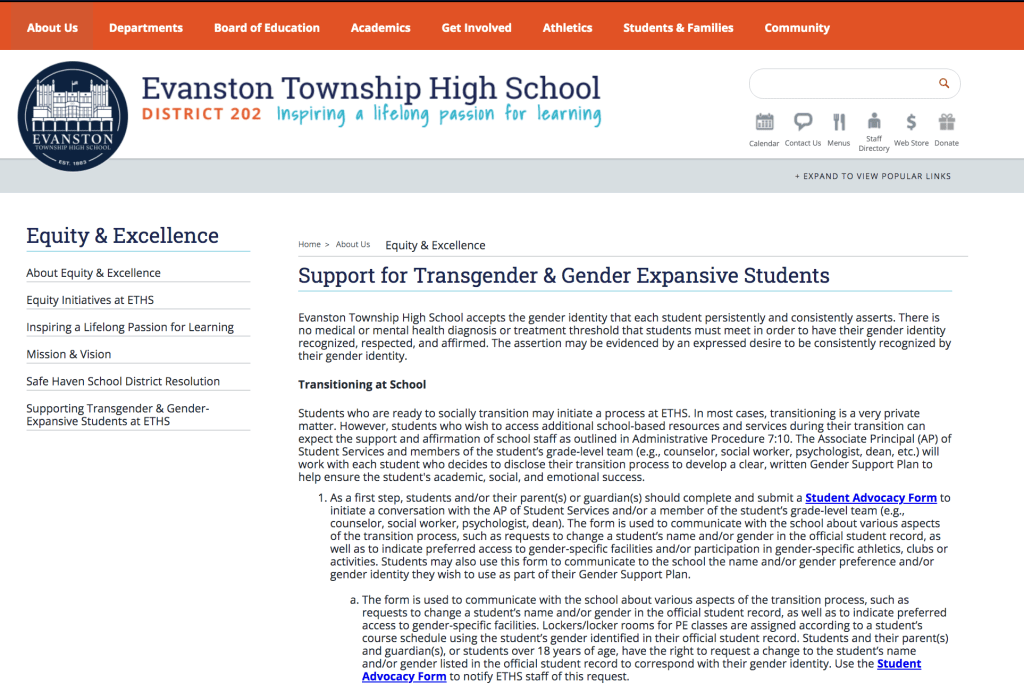
Creating policy and procedure to ensure student gender identity is recognized, respected, and affirmed.
In 2017, students and parents at Evanston Township High School (ETHS) District 202 demanded policy and procedural change to recognize and affirm transgender and gender expansive students. The District 202 Board of Education had the opportunity to lead for change by expanding a policy to ensure equitable educational opportunities for all students. District leaders had the opportunity to establish the procedure that would support this policy expansion and explicitly support equitable opportunities for transgender and gender expansive students, becoming one of the first public high school districts to do so.
In partnership with other school leaders, I led the development of Administrative Procedure (7:10-AP) that would center on recognizing, respecting, and affirming each student’s gender identity with a more clear expectation for the staff’s role in ensuring support and equitable access for transgender, gender expansive and gender-non conforming students. The goal was to improve the day-to-day interactions between students and adults in the building, increase a sense of belonging by implementing procedure that affirmed all identities, outline available services, and provide guidance about how to request support.
Since no such administrative procedures existed in other school districts, we partnered with student and community advocates along with experts in the Gender & Sex Development Program at Lurie Children’s Hospital of Chicago to create a procedure that best addressed the needs of students at ETHS. I partnered with a working group of school leaders who represented key areas across the district, including athletics, school safety and discipline, extracurriculars, teaching staff, and the Associate Principal in charge of student well-being services. As I wrote the procedure, we reflected on our “who” using shared stories of ETHS students and graduates who had walked the school halls and experienced micro-aggressions (or worse) on a daily basis because of their gender identity. I created a Student Advocacy Form to provide a clear channel for students and/or parents to communicate a request for official support. We worked with the District attorneys to better understand what was legally possible in the ever-evolving landscape of transgender rights in public schools and to carve out pathways for students to receive support with–and without–parent involvement.
Deliverables:
- Project Management
- Policy Development
- Form Development
- Copywriting/Editing
- Communications Strategy
- Email Strategy
- Media Relations
Results:
Our efforts resulted in the implementation of an affirming, equity-centered Administrative Procedure (7:10-AP) that was a first of its kind in the nation. The procedure included a newly-developed Student Advocacy form to request services and launch the process necessary to develop a Gender Support Plan, Anecdotally, these efforts seem to have helped improve the day-to-day interactions between students and school adults. Students report an increased sense of affirmation, belonging and well-being along with more positive interactions with staff during the school day.
The conversation around District 202’s 7:10-AP implementation has inspired school systems around the country to reach out to ETHS for guidance and to discuss how updating their policies and procedure could lead to a positive shift in their school’ climate and culture.
The procedure continues to garner significant attention, and the success of its implementation has been a basis for other districts to make similar changes in their schools across the United States and elsewhere.
